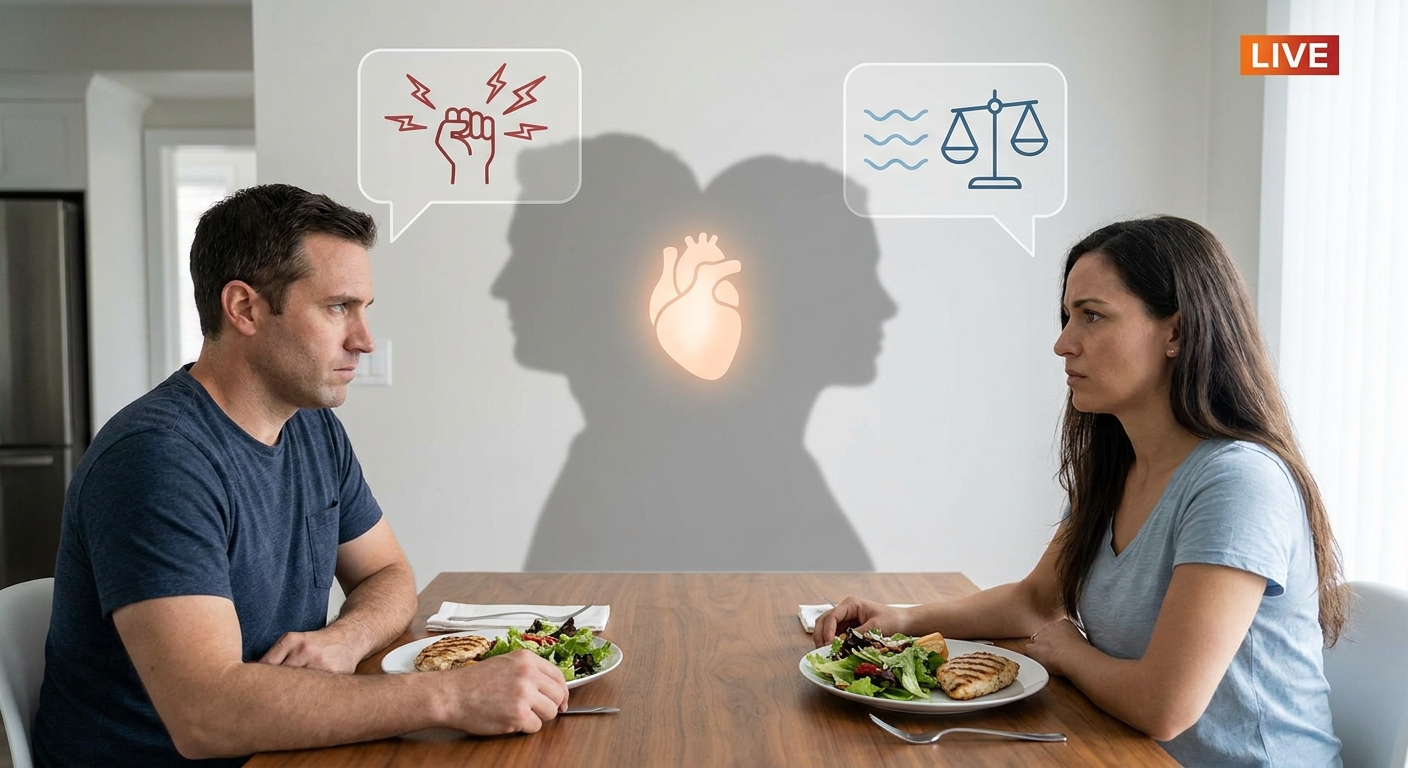
Look around and you’ll notice that a lot of people don’t just have opinions—they wear them.
When Opinions Become Outfits
It’s in the bio: “Plant-based. Anti-crypto. Team iPhone. Childfree by choice.” It’s on the bumper stickers, the memes, the throw pillows that scream “Live, Laugh, Cancel Him.”
At some point, we stopped treating opinions as things we hold and started treating them as things we are. And that shift quietly rewired how we talk to each other.
Let’s sit with that for a second.
How Opinions Turned Into Identity Accessories
A few cultural trends collided to supercharge this.
1. The rise of the micro-tribe
Our grandparents had big, broad categories:
- “I’m Catholic.”
- “I’m a union guy.”
- “I vote this way.”
Now, we have highly specific, overlapping labels:
- “Left-leaning but crypto-curious.”
- “Introverted extrovert who hates small talk but loves networking.”
- “Eco-conscious but flies a lot, don’t @ me.”
We build micro-tribes around everything—coffee, music, parenting, productivity apps. Opinions become membership cards.
2. The internet made everything compare-and-contrast
Your opinion doesn’t just exist; it’s constantly placed next to everyone else’s.
If you tweet “I don’t like pineapple on pizza,” it’s not just a preference; it’s instantly framed as:
- Pro-pineapple vs. anti-pineapple
- Chaos gremlins vs. traditionalists
We’re nudged to define ourselves against others: “I’m not like those people who think X.”
3. Brands taught us to perform values
Companies figured out that consumers don’t just buy products; they buy stories about who they are.
So now you don’t just drink coffee; you:
- Support fair trade
- Fight climate change
- Join a quirky, rebellious tribe of caffeine weirdos
We absorbed that logic. If a brand’s choices say something about them, then our opinions must say something about us. And if someone criticizes our opinion? It feels like they’re criticizing us.
The Problem With Treating Opinions Like Personality
On the surface, it feels empowering to say “My beliefs define me.” But there are some nasty side effects.
1. Changing your mind feels like betrayal
If your opinion is your identity, then reconsidering it feels like erasing yourself.
- “If I change my stance on this, will my friends think I’ve sold out?”
- “If I admit I was wrong, will I still belong in this group?”
So instead of updating our views when we get new information, we double down. We defend outdated opinions like they’re family heirlooms.
2. Disagreement becomes personal warfare
If you are your opinion, then someone disagreeing with you can feel like:
- A rejection
- A character judgment
- A threat to your social standing
That’s how simple sentences like “I don’t think that’s fully accurate” spiral into full-scale fights.
3. Curiosity starts to feel dangerous
When belonging to a group requires strict alignment on certain issues, genuine curiosity is risky:
- “What if I read about the other side and it makes sense?”
- “What if I ask this question and people think I’ve switched sides?”
So we stop exploring, not because we’re sure we’re right, but because we’re scared of the social cost of maybe being wrong.
A Different Way to Think About Opinions
What if we treated opinions less like tattoos and more like draft documents?
Something we:
- Update when new facts appear
- Rephrase when we understand better
- Delete when they’re no longer useful or kind
Here’s a mental reset that helps: “My opinions are tools, not trophies.”
Tools are evaluated by questions like:
- Does this help me understand the world more accurately?
- Does it help me make better decisions?
- Does it help me treat people more fairly?
Trophies are judged by:
- Does this impress people?
- Does this prove I belong to the right group?
- Does this look good on display?
The tool mindset is flexible. The trophy mindset is brittle.
How to Unhook Your Identity From Your Opinions (Without Losing Yourself)
This isn’t about becoming bland or neutral. It’s about building a self that’s strong enough to update.
1. Start noticing your “defensiveness alarm”
Pay attention to what happens in your body when someone pushes back on a belief you hold.
- Tight chest?
- Heat in your face?
- Immediate urge to type a long reply?
That’s usually not logic; that’s identity fear.
Instead of replying instantly, try:
“Interesting, why do you see it that way?”
Or even:
“I see this differently, but I want to make sure I understand your view right. Are you saying…?”
You’re not surrendering. You’re clarifying the battlefield.
2. Separate “who I am” from “what I think” in words
We say things like:
- “I am pro-this.”
- “I am anti-that.”
Try switching to:
- “Right now I think this policy works better because…”
- “From what I’ve read so far, I lean toward…”
It sounds softer, but it frees you. You’re not locking your identity to the opinion; you’re parking there for now.
3. Build identity around values, not specific takes
Instead of defining yourself by your stance on a particular issue, define yourself by how you approach issues.
For example:
- “I care about fairness, so I try to listen to people most affected before forming a stance.”
- “I value curiosity, so I actively read from sources I disagree with.”
- “I take harm seriously, so I’m cautious about spreading unverified claims.”
Values are steady. Takes can change as information does.
4. Schedule opinion updates (yes, really)
This sounds nerdy, but it works: once a month, pick one belief you hold strongly and ask:
- What evidence originally formed this view?
- Has anything changed since then?
- Who disagrees with me in good faith, and what are they saying now?
You might keep your opinion exactly the same—but now it’s grounded, not just inherited.
The Social Upside of Being Less Opinion-Identified
Here’s the surprising part: people who are able to separate self from belief are often better conversationalists and more trusted friends.
Why?
- They don’t explode when challenged.
- They can say “that’s a good point, I hadn’t thought of that.”
- They make space for others to be complex too.
Imagine a group chat where:
- Someone posts a controversial article.
- People respond with questions, not instant moral judgments.
- At the end, at least one person goes, “Okay, I’ve changed my mind a bit.”
That’s not utopian. It just requires enough people who see opinions as tools, not battle flags.
You Are Not Your Hot Take (And That’s Great News)
You’re allowed to:
- Be deeply committed to justice and admit when you misread a situation.
- Care about the environment and say, “I’m still figuring out what really helps.”
- Love your community and disagree with some of its sacred cows.
None of that makes you a hypocrite. It makes you human—and honestly, a more trustworthy one.
The culture around us is loud, certain, and constantly recruiting. Every issue becomes a personality quiz, and every quiz result wants you to sign a lifelong contract.
You don’t have to.
Let your opinions be important—but not sacred. Let them be strong—but not untouchable.
Your worth is not measured by how unwavering you are. It’s measured by how honestly you’re willing to learn in public.
The internet doesn’t reward that as loudly as the hottest takes do.
But the people who actually know you? They usually do.