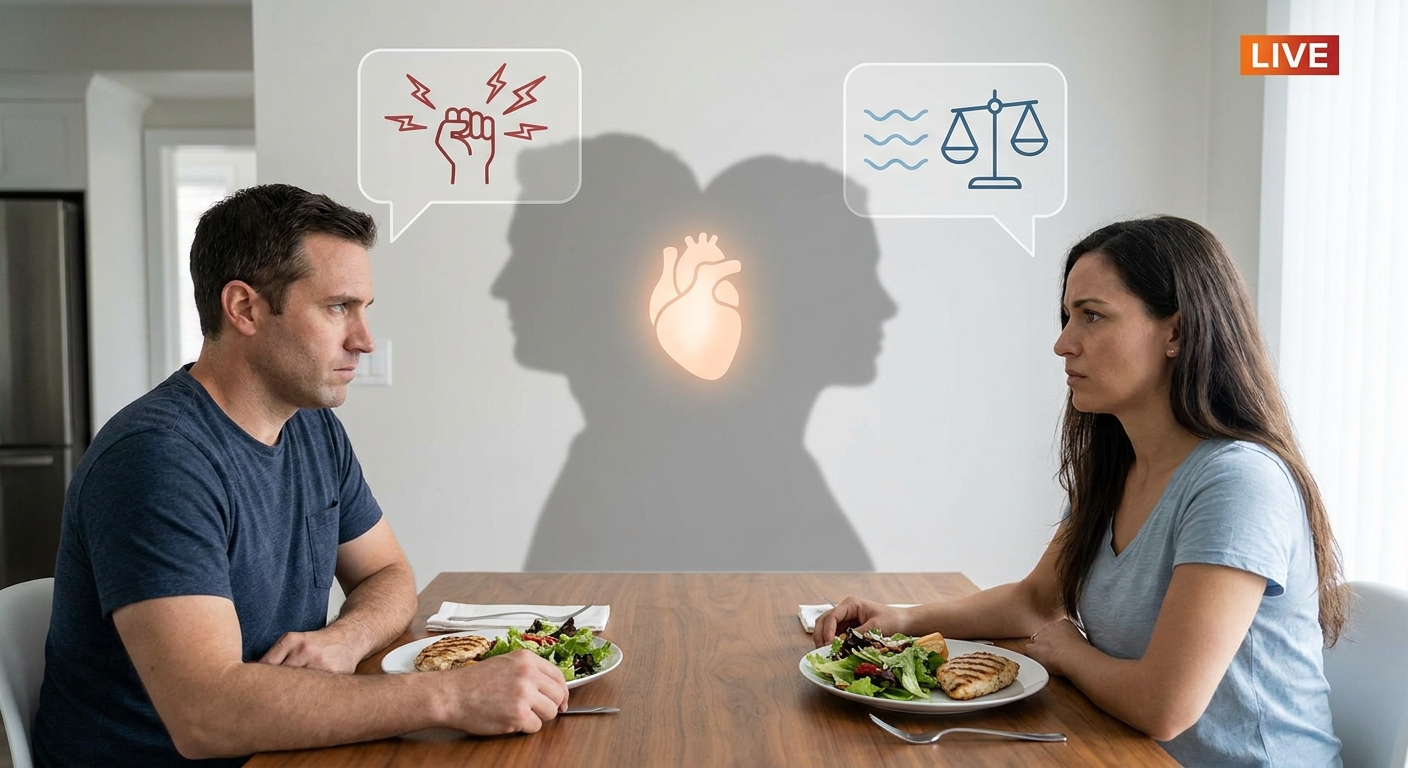
Think about the last time you realized you were wrong about something big.
The Awkward Art of Saying “I Was Wrong”
Not “I thought the meeting was at 3” wrong. More like:
- “I misjudged that person.”
- “I repeated something that wasn’t true.”
- “I was loud and confident about a take that… now embarrasses me.”
Did you:
- Admit it publicly?
- Quietly delete the post and pretend it never happened?
- Dig your heels in because backing down felt worse than being wrong?
We live in a culture that rewards loud opinions but rarely rewards the quiet, uncomfortable work of updating them. Changing your mind is treated like weakness—especially online.
But what if it’s actually a superpower?
Why We’re So Bad at Changing Our Minds
Two forces are at play here: biology and culture.
1. Your brain hates being wrong
On a brain level, being right feels good. It literally releases dopamine.
Being wrong, on the other hand, triggers a little alarm bell that whispers:
“If you’re wrong about this, what else might you be wrong about?”
That’s an existentially uncomfortable question. So we build defenses:
- We cherry-pick evidence.
- We interpret neutral info as supporting our view.
- We surround ourselves with people who already agree with us.
Psychologists call this confirmation bias. Social media calls it: Tuesday.
2. The internet punishes visible pivots
When your opinions are on record—tweets, posts, TikToks—it’s easy for people to screenshot your old self and frame any change as:
- “Hypocrisy”
- “Flip-flopping”
- “Selling out”
So instead of evolving out loud, we develop coping strategies:
- Go quiet about the topic
- Move the goalposts (“I never said that, I meant…”)
- Attack whoever points out the inconsistency
No wonder genuine intellectual growth is rare in public.
Reframing: Changing Your Mind as a Power Move
Here’s the mindset shift: changing your mind is not losing; it’s leveling up.
It means:
- You’re tracking reality more closely than your ego.
- You care more about what’s true than about winning the last argument.
- You’re brave enough to let your past self be less informed than your current self.
Ask yourself: who do you trust more?
- The person who has “never been wrong on this” (which, statistically, is nonsense)
- Or the person who can say, “Yeah, I’ve updated my view as I learned more”
In almost every case, the second person feels more grounded.
A How-To Guide for Actually Changing Your Mind
Let’s make this practical. Here’s a step-by-step approach you can actually use—online and offline.
Step 1: Recognize the “Uh-Oh” Feeling
You know that moment when:
- Someone shares a detail you didn’t know
- You see a source you trust contradict you
- Your instinctive response is to argue harder instead of pause
That’s your update window. You don’t have to change your mind yet, but you should:
- Stop responding in real time
- Screenshot or save the opposing info
- Tell yourself: “I’ll sit with this before I clap back”
Tiny move. Huge difference.
Step 2: Move from debate mode to research mode
Instead of asking, “How do I prove I’m right?” ask:
“If I were wrong, what evidence would convince me?”
Then go looking for it on purpose:
- Search for critiques of your position by people who aren’t trolls
- Read fact-checks from sources that sometimes annoy you
- Ask one smart friend who disagrees, “What do you think I’m missing?”
If you feel your body tightening while you read, that’s normal. Keep going anyway.
Step 3: Run the “stakes test”
Not every issue needs a deep dive. Some are low-stakes preferences: which phone is better, which show is overrated.
Others have real-world consequences:
- Vaccines
- Elections
- Public health
- Policies that affect marginalized groups
For high-stakes topics, your standard of evidence should be higher than “I saw a compelling thread about it.”
The more impact your opinion has on others, the more responsible you are for checking it.
Step 4: Give yourself permission to be in-progress
We’re weirdly allergic to saying, “I don’t know yet, but here’s where I’m leaning.”
Try these phrases:
- “I used to think X, now I’m not so sure. I’m still reading.”
- “I’m updating my view on this; I might change my mind again as I learn more.”
- “Right now, I’d say I’m about 60/40 on this issue.”
You’re not signing a contract; you’re sharing your current draft.
Step 5: Practice a clean pivot
When you do change your mind, you don’t owe the world a 30-slide apology deck. But you can model something rare and powerful:
“I said [old view] about [topic]. After seeing [new info/experience] and doing more reading, I’ve changed my mind. I now think [updated view]. If my old comments hurt or misled anyone, I’m sorry—that was on me.”
Notice what’s in there:
- Specific reference to what changed you
- Clear statement of new view
- Brief, direct apology if needed
No self-flagellation, no drama. Just growth.
What If People Weaponize Your Growth?
Yes, some people will.
- “Look, they admitted they were wrong before—why trust them now?”
- “You’ve changed; you’ve sold out.”
Here’s the thing: those people would rather you be wrong forever than update once. That says more about them than you.
You can respond calmly:
“All that shows is that I’m willing to correct myself when I learn more. I see that as a good thing, and I’ll keep doing it.”
The people worth keeping in your life—and in your audience—will respect that.
How to Build a Culture of Mind-Changers in Your Circle
You can’t fix the entire internet, but you can shape your local ecosystem: your group chats, your comments, your dinner tables.
Try these small shifts:
1. Praise people when they update
When someone says, “You know what, I think I was wrong,” don’t respond with “Finally.”
Say:
- “That’s cool, thanks for saying it out loud.”
- “Honestly, I respect that a lot.”
You’re rewarding the behavior you want more of.
2. Model nuance in public
Post things like:
- “I changed my mind about X after talking to someone directly affected.”
- “You can tell I’m still thinking this through, so I’m open to good sources.”
You give other people permission to be in-process too.
3. Make it safe to be partially wrong
When correcting someone:
- Assume ignorance before malice
- Focus on the idea, not the person
- Offer sources, not just snark
It’s the difference between:
- “Wow, that’s an ignorant take.”
- “Hey, I used to think that too, but here’s what changed my mind.”
Same information, completely different social signal.
The Long Game: Building a Reputation for Intellectual Honesty
In a world of stubborn hot takes, you can quietly build a different kind of reputation:
- The person who argues in good faith
- The person who actually reads the article before reacting
- The person who can say “you’re right, I missed that” without combusting
That doesn’t just make you nicer to be around. It makes your opinions worth more, because people know they’ve survived contact with reality.
If you remember nothing else, keep this one sentence:
Being wrong is inevitable. Refusing to update is optional.
The next time your brain whispers, “Stick to your guns,” ask whether the thing you’re protecting is your pride—or the actual truth.
If it’s just pride? Put the gun down. Pick the mind up.