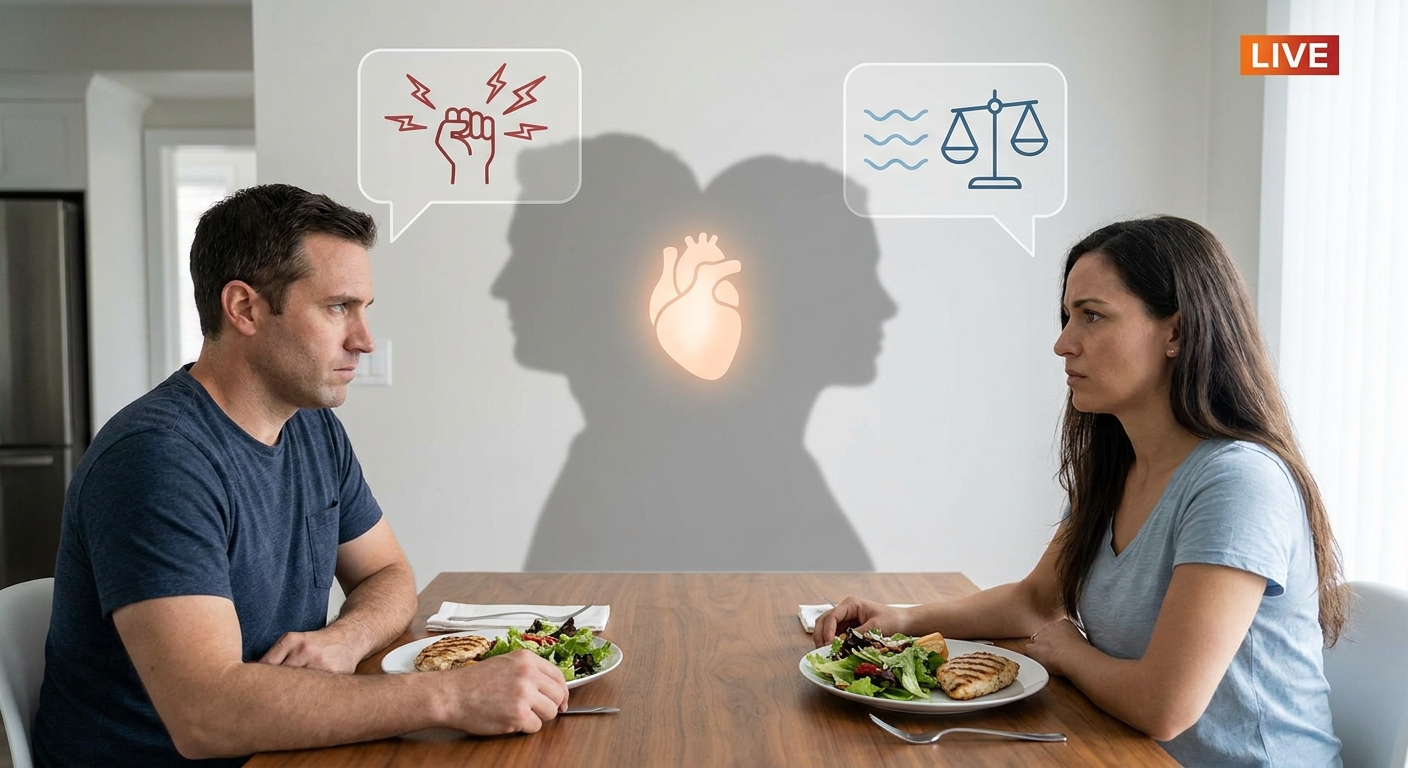
You’ve seen it happen.
Why Every Comment Section Feels Like a Family Fight at Thanksgiving
A simple post:
“Here’s my experience with remote work.”
Three hours later, the comments are:
- Debating capitalism
- Questioning each other’s intelligence
- Dragging in unrelated topics from 2014
How did we get from “I like working in pajamas” to “You’re what’s wrong with society” in 27 replies?
We’re collectively terrible at arguing online—not because we’re all monsters, but because the internet quietly sabotages every good-faith conversation.
The good news: you can opt out of the chaos without muting the world.
Here are seven practical rules for having better arguments online, the kind you wouldn’t be embarrassed to show your future self.
Rule #1: Argue With What Was Actually Said, Not What You’re Afraid They Mean
Online, we shorten everything—threads, captions, videos. That leaves room for projection.
Someone says: “I prefer not to work weekends.”
You read: “People these days are soft and entitled and don’t care about doing a good job.”
That leap is where half of comment wars are born.
Try this simple move: before responding, restate their point in your own words and ask if you’ve got it right.
“So if I’m hearing you, you’re saying X because of Y. Is that accurate?”
Two possibilities:
- They say yes → you’re arguing with the real opinion.
- They say no → you’ve just avoided 40 comments of mutual misunderstanding.
Rule #2: Stop Treating Every Post Like a Ballot
Not every opinion online is a referendum requiring your vote.
Sometimes it’s just:
- Someone processing their experience
- A perspective from a different context
- A question, not a manifesto
Before you fire off a counter-take, ask:
- “Is this aimed at policy or at personal reflection?”
- “Is this person asking for debate or just sharing?”
If it’s the latter, your role can be:
- “Thanks for sharing this; it’s different from my context.”
- “This clashes with my experience, but I’m curious how it looks from your side.”
You’ve just opened a conversation instead of starting a war.
Rule #3: Use the 10-Minute Rule When You’re Heated
If your heart rate spikes while you type, you’re not debating; you’re venting.
That’s not always bad—but it rarely leads anywhere useful.
The 10-minute rule:
- Type your fiery reply.
- Don’t send it.
- Walk away for 10 minutes.
- Read it again like a stranger would.
Now ask:
- Am I trying to understand or just dunk?
- Would I say this to their face in a room full of people I respect?
- Is there one sentence I can delete that changes the tone for the better?
Most of the time, you’ll either soften it—or realize you don’t need to send it at all.
Rule #4: Stop Using People as Symbols
A stranger on the internet says something clumsy about a complex issue.
Within minutes, they become:
- “What’s wrong with millennials.”
- “Proof that boomers are out of touch.”
- “Another example of [insert group] being ignorant.”
We turn actual humans into symbols of whatever frustrates us politically or culturally.
That move might get likes, but it kills any chance of:
- Helping someone grow
- Learning what’s behind their view
- Lowering the collective temperature
Instead, focus on the specific interaction:
“Hey, this phrasing is rough and here’s why. If you meant something else, you might want to reword it.”
You’re still holding them accountable—without turning them into a mascot for everything you hate.
Rule #5: Treat Receipts Like Tools, Not Weapons
Screenshots, quote-tweets, stitched videos—these are the internet’s “receipts.” Used well, they add context. Used badly, they become pure humiliation.
Before you blast someone’s post to your followers, ask:
- Is my goal to correct or to crush?
- Could this person learn from a private DM instead of a public dragging?
- Am I punching up (at power) or punching down (at an individual with way less reach)?
There’s a difference between exposing a harmful pattern in institutions and dog-piling a random person who phrased something badly once.
Use receipts like evidence in a case, not like confetti at an execution.
Rule #6: Know When to Exit Gracefully
Some arguments are just stuck.
Signs it’s time to leave:
- The other person stops answering your points and just attacks your character.
- The replies are getting shorter, meaner, and less specific.
- You’ve started rephrasing the same thing five different ways.
You’re not a failure if you stop. You’re just recognizing the limits of the medium.
Try lines like:
- “We’re going in circles, so I’m going to step back. Thanks for engaging.”
- “We clearly see this differently. I appreciate you explaining your side.”
- “This feels more like a values clash than a facts clash; probably not something we’ll solve here.”
You’re setting a boundary and modeling what it looks like to tap out without a victory lap.
Rule #7: Remember the Human (No, Really)
We all say we know there are people behind the avatars. Then we type things we’d never say to someone’s face.
To reset your brain, do this tiny exercise before you hit reply:
Picture them:
- Eating breakfast
- Laughing at something dumb
- Worrying about money or family or health, like everyone else
It sounds cheesy, but it shrinks the part of you that wants to go nuclear.
Then ask yourself:
“If this person was my cousin saying this at a family dinner, how would I respond?”
Chances are, you’d:
- Argue, sure—but with more patience
- Drop the cheap insults
- Remember they’re more than this one bad opinion
What Better Arguments Actually Give Us
Done well, arguing online can:
- Sharpen your thinking
- Reveal blind spots in your worldview
- Connect you to people you’d never meet otherwise
But that only happens if we treat opinion-sharing as a chance to understand, not just to perform.
You don’t have to fix every messy thread or rescue every doomed debate. You just have to choose, in your corner of the internet, to argue like everyone reading is a real person you might run into in line for coffee.
The bar is low. If you:
- Read before reacting
- Ask before assuming
- Exit before exploding
…you’re already in the top tier of online arguers.
And who knows? One day, someone might screenshot your comment—not because it was the cruelest clapback, but because it was the first one that made the conversation better.