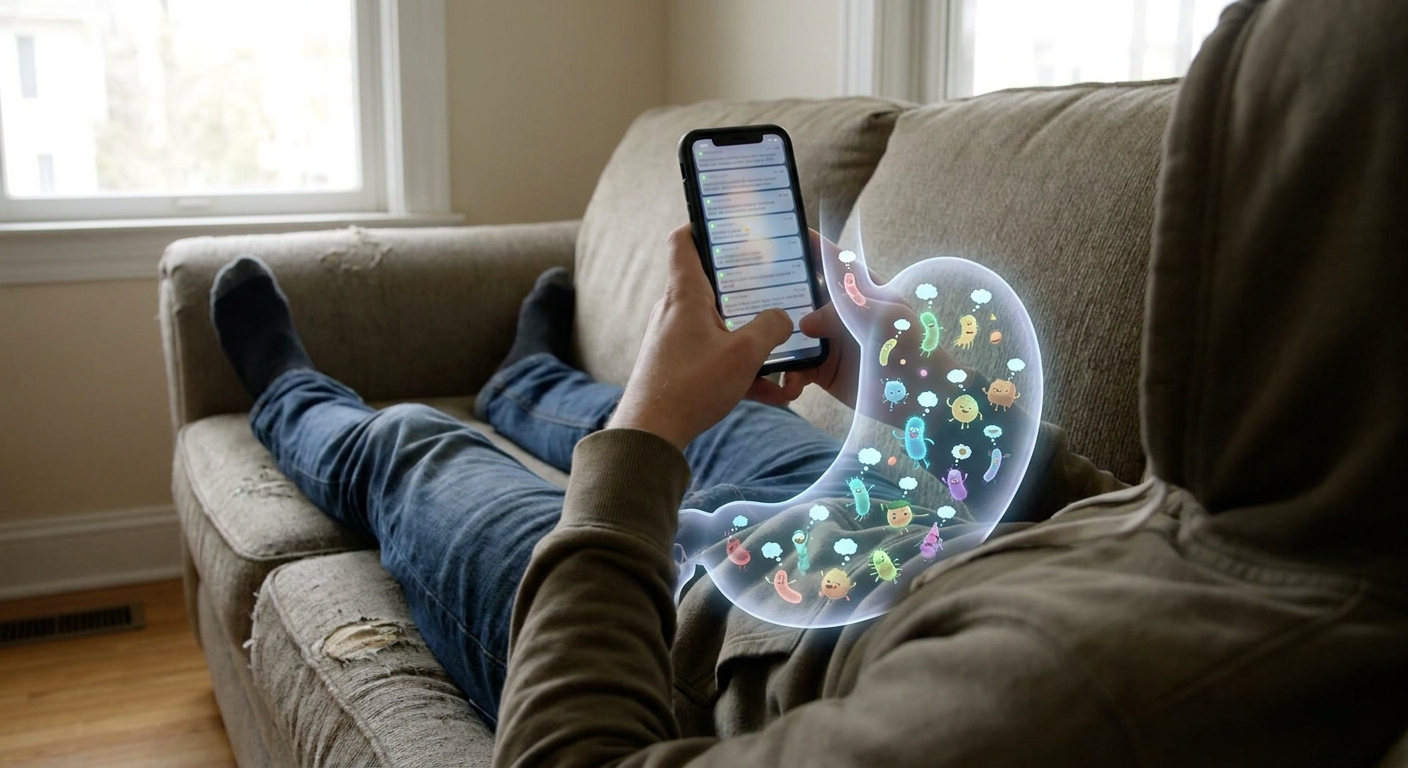
If your body had a group chat, your gut would be that one friend who knows everyone’s business and somehow controls the vibe.
The Weird Truth: Your Gut Is Basically a Busy Group Chat
It talks to your brain. It texts your immune system at all hours. It has strong opinions about your mood, your appetite, and even how much energy you have.
And just like a real group chat, when things get messy — too loud, too quiet, or full of junk — everything starts to feel a bit chaotic.
Let’s unpack how your gut became the main character of modern health, without getting lost in buzzwords and probiotic marketing.
Meet Your Gut Microbiome: Trillions of Tiny Roommates
Inside your digestive tract lives a wild ecosystem: bacteria, fungi, and other microbes. That’s your gut microbiome.
Some fast facts:
- There are more microbial cells in your gut than human cells in your body, depending on how you count.
- These microbes help break down food you can’t digest alone.
- They produce vitamins, short‑chain fatty acids, and chemical signals that talk directly to your immune and nervous systems.
In other words, your gut is less like a tube and more like a rainforest — complex, busy, and easily thrown off.
The Gut–Brain Group Chat: Why You Feel Anxiety in Your Stomach
You know that “gut feeling” or the way your stomach flips when you’re stressed? That’s not poetry; that’s wiring.
Your gut and brain are connected by the vagus nerve, like a fiber‑optic cable carrying status updates:
- About 80% of the signals go from gut to brain, not the other way around.
- Gut microbes can produce neurotransmitters like serotonin and GABA, which play roles in mood and anxiety.
- Inflammation in the gut has been linked to brain fog, low mood, and fatigue.
So when people say “mental health is connected to gut health,” that’s not wellness‑blog fluff. It’s literally biology.
How Modern Life Wrecks the Chat
We didn’t suddenly become weak or “bad at health.” The environment just changed faster than our bodies could.
1. Ultra‑processed foods
- They’re easy to overeat and often low in fiber.
- Many contain additives that may alter the gut environment.
- Your microbes starve without fiber and a variety of plant foods.
- Stress hormones change gut motility (how fast everything moves through).
- They can also shift which microbes thrive.
- That’s why some people get diarrhea or constipation before a big exam, flight, or presentation.
- Poor sleep alters the types of microbes in your gut in just a few days.
- Those changes can then push you toward cravings for sugary, high‑fat foods.
- Antibiotics save lives, but they also carpet‑bomb your microbiome.
- Some heartburn meds and painkillers, when overused, can also affect gut health.
2. Chronic stress
3. Sleep disruption
4. Overuse of certain meds
Individually, these things are manageable. Together, they form the perfect storm.
What ‘Fixing Your Gut’ Does Not Mean
Before we get into what to do, let’s clear up some myths:
- You do not need a 10‑day juice cleanse.
- You do not need to cut out every grain, sugar molecule, and joy from your life.
- You definitely don’t need a $200 monthly subscription box of powders.
Your gut does not need drama. It needs consistency and variety, not extremes.
5 Gut‑Friendly Habits That Don’t Require a Personality Overhaul
1. Aim for 20–30 Different Plant Foods a Week
Sounds like a lot, but it adds up quickly.
Count:
- Fruits and vegetables
- Beans and lentils
- Nuts and seeds
- Whole grains (oats, quinoa, brown rice, etc.)
- Different microbes like different fibers.
- More variety = more species = more resilience.
- Toss mixed frozen veg into stir‑fries.
- Buy mixed nuts instead of just almonds.
- Rotate your grains: rice one night, quinoa the next, oats in the morning.
Why it works:
How to do it without losing your mind:
Make it a game: can you hit 20 by Sunday?
2. Add, Don’t Just Restrict
Instead of obsessing over what to cut, add gut‑friendly foods first:
- Fermented foods: yogurt with live cultures, kefir, kimchi, sauerkraut, miso, kombucha (watch the sugar, though).
- High‑fiber foods: beans, lentils, chickpeas, whole fruit (not just juice), oats.
You don’t need to drown yourself in kombucha. A few spoonfuls of yogurt a day still counts.
3. Build a ‘Boring Breakfast’ You Actually Like
Your gut loves routine. A simple, repeatable breakfast can be a secret health hack.
Examples:
- Oats + fruit + nuts + yogurt
- Whole‑grain toast + avocado + egg + greens
- Smoothie with frozen berries, spinach, yogurt or milk, and a scoop of seeds
Do this most days, and you’ve already ticked a lot of gut‑friendly boxes before lunch.
4. Walk It Out (Literally)
Movement directly affects your gut:
- Gentle exercise can improve digestion and reduce constipation.
- Walking after meals has been shown to help blood sugar control.
- 10–15 minutes of walking after your biggest meal.
- Pacing during phone calls.
You don’t need a fancy workout plan. Try:
Your gut cares more that you move than how you move.
5. Make Peace With Imperfect Days
Your gut is resilient. One weekend of pizza and cocktails doesn’t permanently destroy it.
What matters more:
- The pattern you return to most of the time.
- Whether you’re consistently giving your microbes something to work with.
If you had a rough food day, ask: “What’s one thing I can add tomorrow that my gut will appreciate?” Maybe it’s an extra piece of fruit or a bean‑based lunch. That’s enough.
When to Actually Worry (And See a Doctor)
While everyday bloat and occasional stomach weirdness are common, talk to a healthcare professional if you notice:
- Unexplained weight loss
- Blood in your stool
- Persistent severe pain
- Ongoing diarrhea or constipation
- Symptoms that wake you up at night
Gut health trends are not a replacement for an actual diagnosis.
The Big Picture: Turn Down the Noise, Feed the Ecosystem
Your gut isn’t asking you to be perfect. It’s asking you to:
- Calm the chaos (less stress, more sleep, fewer extremes)
- Feed the ecosystem (more plants, more fiber, some fermented foods)
- Move the body (for digestion, blood sugar, and mood)
You don’t have to overhaul your personality to get there. You just need a few new defaults — little choices that, over time, make your internal group chat a lot less dramatic.
Think of every colorful meal, every short walk, every extra hour of sleep as a tiny text to your gut saying, “I see you. I’m trying.”
It’s listening. And it texts back — in energy, mood, and resilience.