For most of pop‑culture history, the path to fame looked something like this: get discovered, sign something, hope the gatekeepers like you, repeat.
Fame Is No Longer a Straight Line
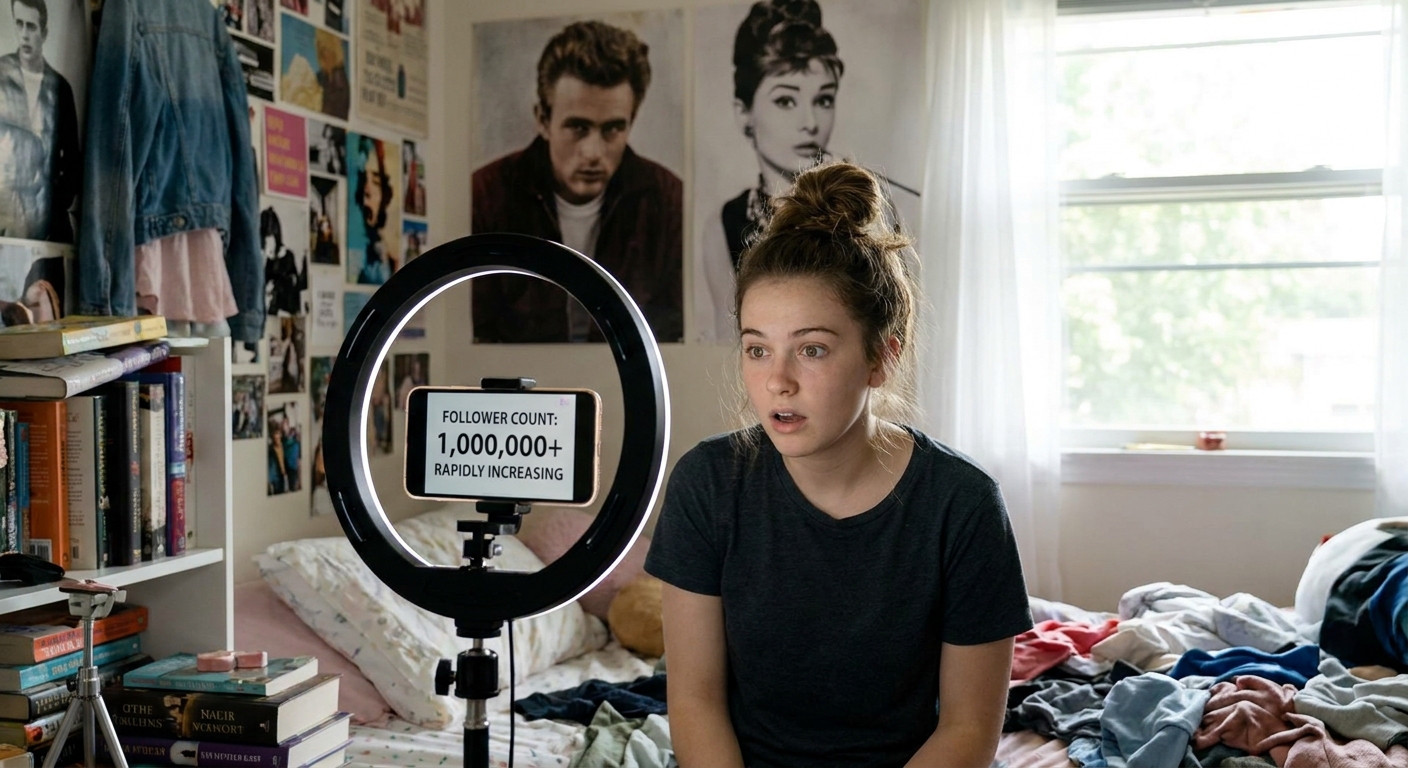
Now someone can duet a video in their bedroom at 2 a.m., wake up, and suddenly be:
- The face of a micro‑trend
- The hook on a Top 10 song
- A meme deployed millions of times
TikTok didn’t just give us shorter videos. It quietly rewired how fame works—and who gets to have it.
Let’s break down what’s actually changed, and how it affects not just creators, but anyone who lives in the blast radius of online culture. (So… all of us.)
Algorithm First, Celebrity Second
In the old model, you became famous then your work got distribution. In the TikTok era, distribution comes first.
The platform doesn’t ask: “Who are you?” It asks: “Do people watch this?”
The result:
- A video from a nobody can outperform a major celebrity on any given day
- Obscure songs, indie films, or forgotten TV moments can go suddenly viral
- Clips—not people—are the primary unit of fame
That’s why you can absolutely recognize “that guy from that one TikTok” and still have no idea what his name is.
Fame has become modular: tiny, detachable, and often separated from the person who made the thing.
The Rise of the “Micro‑Micro Celebrity”
You’ve heard of micro‑influencers—those creators with smaller but highly engaged followings. TikTok took this and sliced it even thinner.
We now have people who are:
- Famous only within a hyper‑specific niche (e.g., “sourdough science side of BreadTok”)
- Recognized only within certain geographies or languages
- Known only for one format (like POV skits, GRWMs, or fan edits)
And the wild part? This micro‑micro celebrity can still be:
- Economically meaningful (brand deals, Patreon, merch)
- Culturally loud inside its niche
- Completely invisible outside that bubble
Instead of one big pyramid of fame, we’re living in a constellation of tiny spotlights.
Relatability Is the New Glamour
Traditional celebrity culture thrived on distance: red carpets, paparazzi shots, glossy magazine spreads. TikTok flattened that.
Now the stuff that really moves:
- Messy room confessionals
- “Here’s my unfiltered day” vlogs
- “I’m literally crying in my car but here’s the story” videos
It’s not that polish is dead—people still love beautiful visuals—but performance has shifted from "untouchable" to "relatable".
The new question is: Do I believe this person actually lives like this?
That’s why when standard celebrities join TikTok and just repost overproduced clips, it often falls flat. The platform rewards intimacy, not distance.
Fame on Shuffle: When Your 15 Minutes Come in 15‑Second Bursts
One of the strangest things about TikTok fame is how out of order it can be.
You might:
- Go viral on your 3rd video, get nothing on your next 50, then blow up again months later
- Have your old content suddenly resurface because the sound is trending
- Get recognized in public only for a joke you barely remember making
Fame is no longer a steady climb or a single big break. It’s closer to having random lightning strikes around you—and trying to build a career out of unpredictable weather.
This also means:
- More people get some exposure
- Fewer people can rely on that exposure to be stable
- Burnout hits faster when creators feel forced to chase their own virality
The Emotional Tax of Being “Semi‑Known”
There’s an unglamorous side to this new fame. You can be just famous enough to:
- Get hate comments and harassment
- Be recognized when you’re not in the mood
- Have strangers dissect your appearance, relationships, or mental health
…but not famous enough to:
- Earn a living from it
- Have a team to manage the chaos
- Get public sympathy when you say, “This is wrecking my brain”
The internet loves a discovery. It’s far less interested in the maintenance phase—when creators quietly wrestle with whether to keep performing their online persona.
Why This Matters Even If You Never Want to Be Famous
Even if you don’t care about follower counts, this shift impacts you in subtle ways:
Attention as Currency
Brands, politicians, and even regular people are learning TikTok logic: be quick, be visual, be emotional. That changes how everything—from news to activism—gets presented.
Culture Moves Faster
Micro‑trends (like certain aesthetics, sounds, filters) now have shorter life cycles. The pressure to “keep up” can make life feel like a constantly expiring meme.
Parasocial Relationships Multiply
You may feel weirdly close to people you’ve never met, and feel real grief when they burn out, disappear, or get “canceled.”
How to Navigate This New Fame Ecosystem (Without Losing Your Mind)
Whether you create content or just consume it, some ground rules help.
If You’re a Viewer
- Resist the “main character” trap. Not everyone needs to be a brand. Having a private life is not a failure.
- Be a better audience. Comment like you’re talking to a human being you might see tomorrow.
- Curate aggressively. Your For You Page is shaping your mood and worldview. Don’t be afraid to block, mute, and reset.
If You’re a Creator (Even a Casual One)
- Decide your boundaries early. What’s off‑limits? Relationships? Your workplace? Your family? Future‑you will thank you.
- Treat virality as a bonus, not a business model. Build habits and skills, not just hits.
- Have a Plan B for your identity. Who are you if the algorithm gets bored? That’s not a theoretical question.
The Upside: Real Diversity, Weirdness, and Surprise
For all its chaos, TikTok‑style fame has some huge upsides:
- People from outside traditional media centers are getting noticed
- Niche cultures and languages can find global audiences
- Weird, experimental, and deeply specific content can thrive
We’re seeing trans creators, disabled creators, small‑town artists, and people over 40 carving out space that old Hollywood rarely offered.
Is it perfect? Absolutely not. The algorithm has biases, the platform has issues, and the economic model is still skewed. But the spectrum of who gets seen has undeniably widened.
So, What Does Fame Even Mean Now?
Maybe fame used to mean “most people know who you are.” Now it’s more like:
“Enough of the right people know you exist—and care enough to come back.”
That might be 500 people, or 5 million. It might last a week, or a decade. It might live in one country, or one Discord server.
The real shift is this: fame has stopped being a single mountain everyone’s climbing and turned into a sprawling landscape full of strange little cities.
You don’t have to move there. But you should probably know the map—because whether you’re scrolling, posting, or just trying to understand why that audio is suddenly everywhere, you’re already living in its weather system.
And in this new world, the question isn’t just “Who’s famous?” It’s also: famous to whom, for what, and for how long?